Managing Stress Behind the Wheel: A Guide for New Drivers
The first time you drive on your own can feel exciting, but it can also feel overwhelming. As a new driver, it is completely normal to experience stress. There are a lot of things happening at once: watching the road, checking mirrors, paying attention to other drivers, and making quick decisions. Add in the pressure of running late or having friends in the car, and that stress can build quickly.
The good news is that there are many simple ways to manage stress and stay calm behind the wheel. Safe driving does not just start when you turn the key in the ignition—it starts before you even get into the driver’s seat.
Start by Planning Ahead
One of the easiest ways to reduce stress is by giving yourself extra time before leaving for your destination. Running late can lead to rushed decisions like speeding, rolling through stop signs, or taking unnecessary risks.
When you plan ahead and leave earlier, you give yourself space to deal with traffic, red lights, or unexpected delays without feeling overwhelmed. A few extra minutes can make the difference between a stressful drive and a calm one.
Use Grounding Techniques While Driving
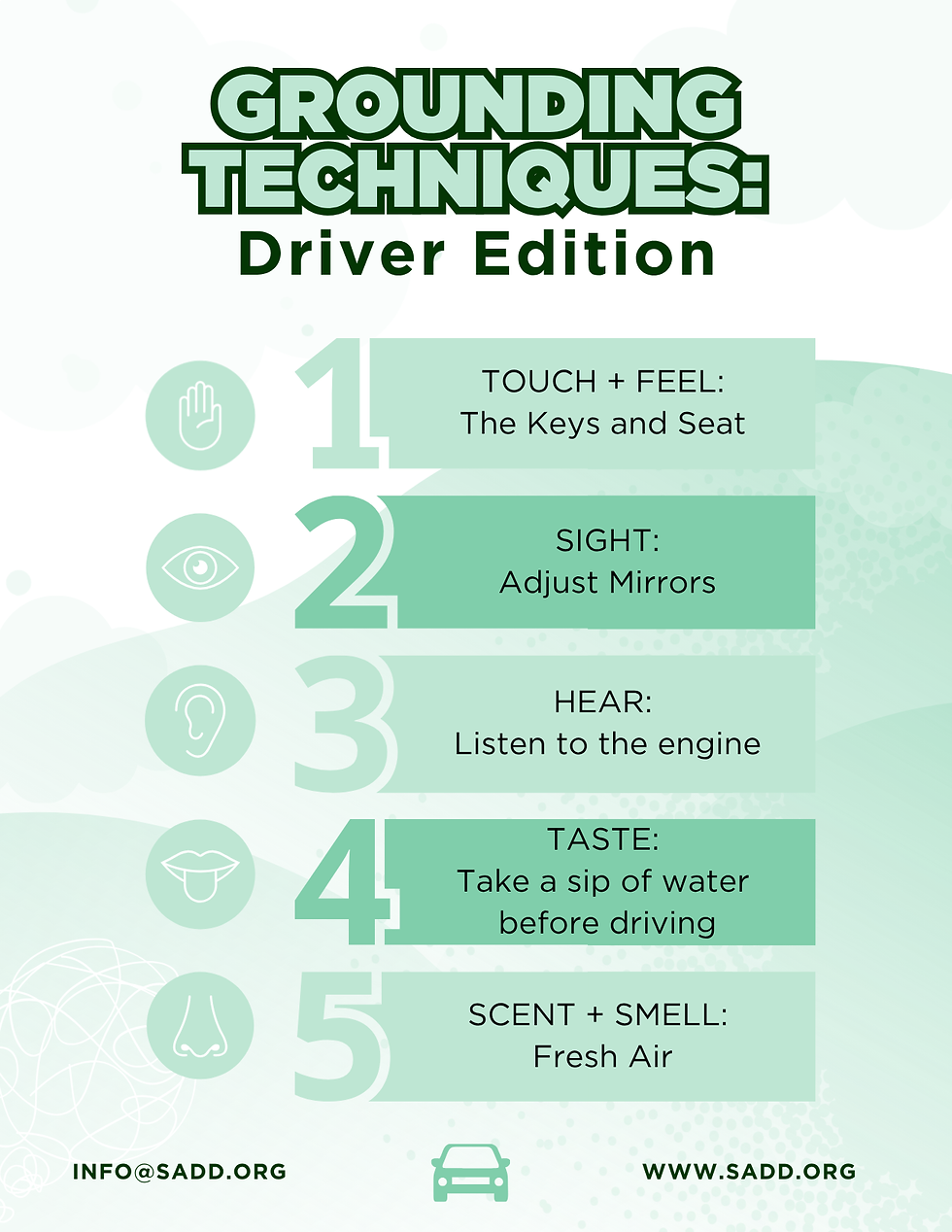
Even with planning, stressful moments can still happen. When they do, grounding techniques can help you stay calm and focused.
Simple practices like deep breathing, observing your surroundings, and focusing on the feeling of driving can help bring your attention back to the present moment. Notice the road ahead, the feel of the steering wheel in your hands, and the rhythm of the car as you drive. These small actions can help reduce stress and keep your mind focused on safe driving.
Set Expectations with Your Passengers
Another important way to manage stress is by controlling what happens inside your vehicle. Before you start the car, it can help to have a quick conversation with your passengers about expectations.
As the driver, you are responsible for everyone in the car, but safety is a shared responsibility. Let your passengers know how they can help create a safe and calm environment during the ride.
Here are a few expectations that can make a big difference:
No Distractions Passengers should help the driver stay focused. This means avoiding loud or distracting behavior, not grabbing the steering wheel, and respecting that the driver needs to concentrate on the road.
Music and Volume Agree on music before starting the trip. Some drivers prefer calming music or even silence. Whatever you choose, keep the volume low enough so the driver can still hear traffic, sirens, and directions. Set the playlist before you leave.
Navigation Help Passengers can be a big help by managing directions or the GPS. Asking someone else to handle navigation or change the music allows the driver to keep their eyes on the road.
Seatbelts Before the car moves, everyone should buckle their seatbelt. A good rule is simple: the car does not move until everyone is buckled.
Respect the Driver’s Decisions Passengers should respect the driver’s choices. If the driver needs to slow down, change routes, or pull over, those decisions should be supported.
No Pressure or Risky Behavior Passengers should never pressure a driver to speed, race, show off, or take risks. Safe driving should always come first.
Speaking Up for Safety Passengers also play an important role in safety. If they notice something concerning—such as another vehicle getting too close or the driver appearing tired—they should respectfully speak up.
Substance-Free Ride To keep the environment safe and distraction-free, there should be no alcohol, drugs, or vaping in the car.
Know When to Take a Break
Sometimes stress builds during a drive, especially in heavy traffic or after a frustrating interaction with another driver. When this happens, it is okay to take a break.
If you feel overwhelmed, angry, or anxious, pull over in a safe place, such as a parking lot or rest area. Take a few minutes to breathe and calm down before continuing your trip. Taking a short pause can prevent emotional decisions and help you refocus on driving safely.
Stay Present on the Road
When stress builds, it is easy for your mind to wander or focus on negative thoughts. Staying present can help prevent that. This is an example of cognitive distraction.
Pay attention to what is happening around you: traffic patterns, road conditions, and how your car feels as you drive. Focusing on these details keeps your mind engaged in the task of driving and helps reduce unnecessary stress.
Avoid Aggressive Reactions
One of the biggest sources of driving stress is other drivers. Someone might cut you off, drive too slowly, or make a mistake. While these situations can be frustrating, reacting aggressively only makes things worse.
Instead of honking excessively or trying to “get back” at another driver, focus on maintaining a safe distance and continuing calmly on your route. Staying patient helps keep everyone safer on the road.
Remember: Safe Driving Starts with a Calm Mind
Driving is a big responsibility, especially for new drivers. Stress is normal, but it does not have to control your experience behind the wheel.
By planning ahead, practicing calming techniques, setting expectations with passengers, and staying focused on the road, you can build confidence and reduce stress while driving.
Safe driving is not just about knowing the rules of the road—it is also about creating the right mindset before and during every trip. When you stay calm, focused, and prepared, you make the road safer for yourself, your passengers, and everyone around you.